A wellness retreat was not originally part of my birthday plans.
It was a milestone birthday and at first I thought I should celebrate it by doing something big and completely unfamiliar. I imagined myself boarding a plane alone, flying somewhere distant, and proving myself that I was finally ready for a “more mature role” after being comfortable and coddled for so long. But it did not take long for me to realize that the idea sounded far more exciting in theory than in practice.
The thought of traveling alone felt exhausting and anxiety-inducing in ways I was not emotionally prepared for yet. So instead of choosing something completely unfamiliar, I chose something that still felt relatively safe, but different enough to feel meaningful.
I went on a glamping wellness retreat.
I’d be a lair if I would say I didn’t think it would be easy. Because, come on! I had already gone camping several times before, and so it was easy to convince myself that sleeping in a tent would not be a huge biggie. Besides, this was glamping so there was a proper bed, comfortable accommodations, and activities specifically designed to help people relax and recharge.
I was under the impression that spending my birthday surrounded by nature, silence, and slow living would automatically make me feel peaceful and stress-free. But this wellness retreat humbled me in ways I did not expect.
And I quickly realized that resting is much harder when your mind and body are used to surviving all the time.
I thought slowing down would feel peaceful
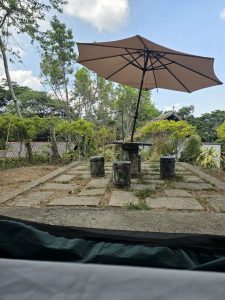
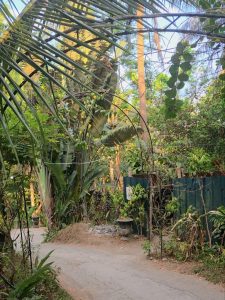
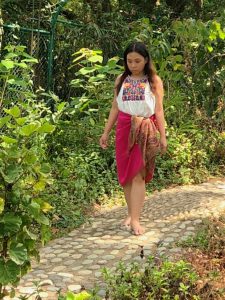
There was a short shuttle ride from the reception area to the actual tent accommodations (maybe around two minutes in total) but it already felt like entering a completely different world. The entire place had this untouched, nature-heavy atmosphere. Think of Calabarzon neighborhoods from the ‘90s: quiet backyards, undeveloped land, trees everywhere. It was the kind of environment that felt both nostalgic (because I spent my childhood in that kind of setting) and unfamiliar at the same time.
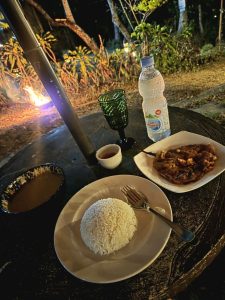
Despite being inside a tent, the accommodations were surprisingly comfortable. The bed was soft, there was an electric fan I barely needed because the place was already naturally cold, and snacks were waiting for me when I arrived. The first few activities felt calming enough too. We went forest bathing as part of the program and there was even a bonfire during dinner later that evening.
At first, I genuinely thought, maybe this relaxing thing would be easy after all.
Then the Thai massage session happened.
The massage area was a large open spa hall where people could also do yoga sessions. Traditional Thai massages were done on the floor, so there I was in my pajamas, slowly melting under the strong but careful movements of the masseuse while trying very hard to embrace the wellness retreat experience.
That’s when I heard a sound.
It did not sound like rustling leaves. So naturally, I asked the masseuse what it was.
“Tuko ‘yon, ma’am,” she answered casually.
My eyes widened immediately.
There was an actual gecko somewhere nearby? A real one? In the wild? Close enough for me to hear?
Suddenly, my peaceful wellness retreat experience became a survival situation in my head. What if it jumped on me while I was lying on the floor? What if there were more outside? What other creatures were casually existing around me while I was trying to relax?
Of course, I pretended I was fine. But the strange nature sounds did not stop there.
Later that night, while trying to sleep inside the tent, the wind became stronger. Every sound outside immediately transformed into a possible threat inside my brain. Was someone outside the tent? Was that just leaves moving? What animals were wandering nearby? What if the tent somehow collapsed because of the wind, although I logically knew that was almost impossible?
My mind kept creating problems faster than nature could create sounds.
Was I able to rest properly that first night? Well, I’d be a liar if I said yes.
Because that is the difficult thing about being an overthinker: even silence can feel loud when your mind does not know how to stop scanning for danger. And that was the first thing this retreat revealed to me.
I did not actually know how to relax as well as I thought I did.

The forest was quieter than my mind
Because it was a wellness retreat, most of the activities were intentionally designed to help people slow down, detoxify, and de-stress.
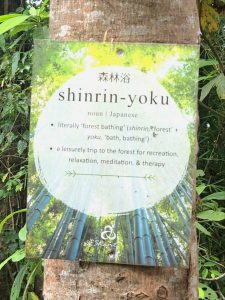
One of them was forest bathing, a practice popular in Japan that encourages people to reconnect with nature as a way of easing stress and anxiety. At least, that was my understanding of it. And yes, it lowkey worked on me.
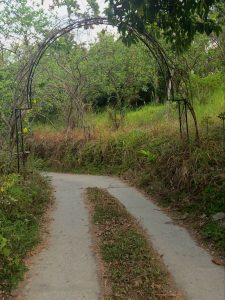
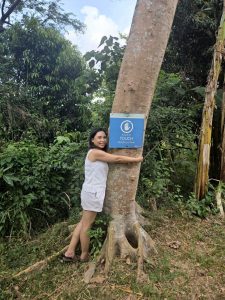
Somewhere between the trees and quiet walking paths, I found myself reconnecting with things I had not paid attention to in years. Fruit trees I used to see constantly as a child before our neighborhood slowly became more concrete than green. There were guava trees, makopa trees, atis, guyabano, mangoes, and duhat. At one point, I even picked fresh makopa straight from the tree and happily ate it like the rural kid inside me had suddenly reawakened.
We were also served wintermelon tea, which, to me, tasted suspiciously close to gulaman.
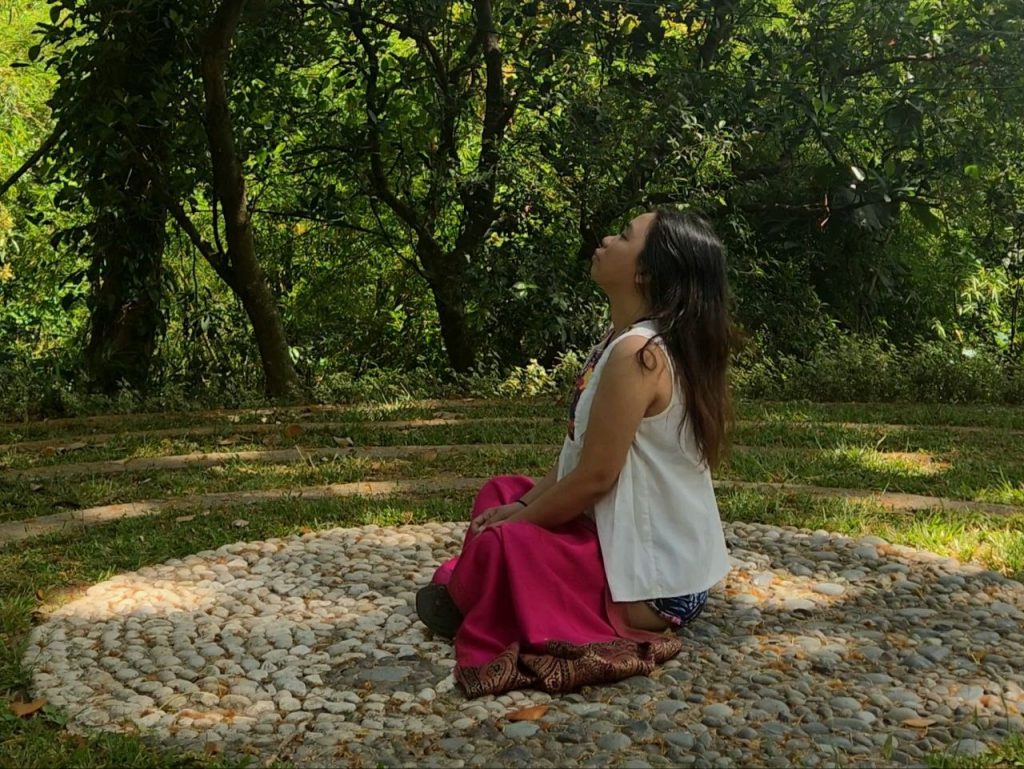
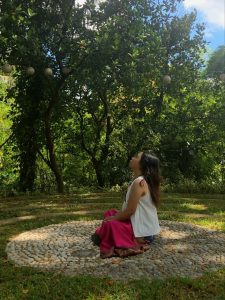
The retreat also included a labyrinth walk, where participants slowly walked through a circular path while meditating and clearing their minds. The goal was to stay present. To breathe deeply. To notice the wind, the smells, the sounds around you, and simply exist in the moment without carrying the weight of your worries.
This activity made me I realize something important about myself: I was not built for this kind of calming down.
Because while everyone else was probably trying to empty their minds, my brain was still thinking about the gecko from the previous night. What if it suddenly jumped onto my lap while I was meditating? What if an insect flew too close to my face while my eyes were closed and I accidentally inhaled it during breathing exercises? My mind kept producing unlikely scenarios that somehow still felt possible enough to worry about. Even in silence, my thoughts refused to sit still.
At first, I felt a little embarrassed about it. A wellness retreat was probably the one place where I was supposed to finally relax and quiet my thoughts, yet the overthinker version of me stubbornly refused to leave me alone.
But eventually, I realized something gentler too. That not every type of healing is meant for everyone. Meditation might work beautifully for some people, but others (me included) find peace in different ways entirely.
And that is perfectly okay too.
Saying no is also self-care
The reflexology walk did not surprise me as much as I thought it would. I had already seen Tiktok videos of it before, so I knew it would hurt. And it did. Not like hell, but big time. But it was the kind of pain that slowly became more tolerable the longer you stayed in it. Uncomfortable, yes. But manageable enough that I did not find myself deeply emotional over the experience.
The banana leaf wrap, however, was an entirely different story.
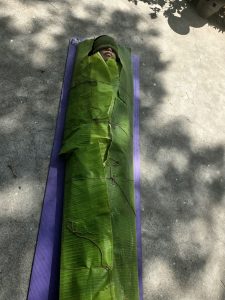
I had never seen anything like it before, so naturally I became curious immediately. The idea sounded almost relaxing in theory: being wrapped in banana leaves while heat supposedly helped the body detoxify and absorb nutrients. Free radicals out, antioxidants in. Or at least that was how I imagined it worked.
At first, I was excited. And then the heat started building.
And building.
And building.
What I did not realize was that the experience would feel even more intense than a sauna (which I skipped because again, hello, myasthenia gravis). The heat wrapped around my body in a way that felt suffocating instead of relaxing. At first, I kept trying to endure it. What was thirty minutes anyway?
Ten minutes passed.
Then fifteen.
Then twenty.
And somewhere around that point, I finally said: okay, ayoko na.
And strangely enough, that tiny moment stayed with me longer than I expected. Because it just dawned on me how unfamiliar it usually felt for me to simply stop something uncomfortable without forcing myself to finish it first.
I was so used to enduring things even after I already wanted to quit. Finishing food slowly even when I was already full because sayang naman. Forcing myself to stay awake even when exhausted because someone needed me. Continuing to work even while feeling physically unwell because responsibilities did not pause just because my body wanted rest.
I realized how often I treated endurance like a personality trait.
But healing is not always about pushing yourself harder, I suddenly thought. Sometimes self-care looks like knowing when to stop. That saying no is also a form of taking care of yourself.
Beautiful things take patience
Two of the activities during the retreat involved balance in completely different ways.
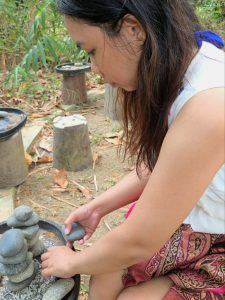
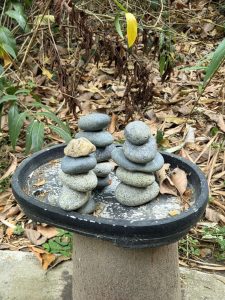
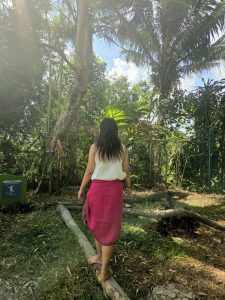
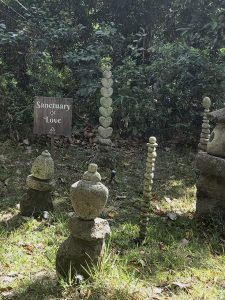
One was stone balancing, where we carefully stacked uneven stones on top of each other without letting them fall. The other was log balancing, where we had to walk across a narrow log while trying not to lose our footing.
Both sounded much easier in theory.
But I spent several minutes trying to figure out the log balancing activity alone. Coordination has never exactly been my strongest skill, especially with myasthenia gravis constantly reminding me that my body likes making simple things unnecessarily difficult sometimes. So at first, I genuinely did not know what I was supposed to do. Then suddenly, a very simple thought entered my mind: the goal is just to reach the other side without falling.
So instead of looking down or overthinking every movement, I focused my eyes on the end of the log and slowly moved toward it. And surprisingly enough, I made it across without falling.
The stone balancing activity on the other hand, felt similar in concept but emotionally very different.
I used to see photos of perfectly balanced stones online and immediately assumed it was easy. Something aesthetic people casually did for desktop wallpapers and Pinterest photos. But the truth was, it requires an unreasonable amount of patience.
The stones were uneven and unpredictable. If I moved too quickly or became impatient, everything collapsed immediately. I had to stay calm, move carefully, and stop trying to force the process. And somewhere in the middle of balancing those stones, I realized how similar it felt to chasing beautiful things in real life.
Most meaningful things are not built instantly. They take time. Patience. Focus. Repeated effort. Sometimes they require you to slow down enough to build them carefully instead of rushing toward results. And I guess that’s what balance really is. It is not perfection but learning how to move through life steadily without collapsing under the pressure to arrive quickly.
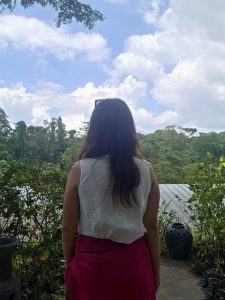
Maybe rest sounds like this
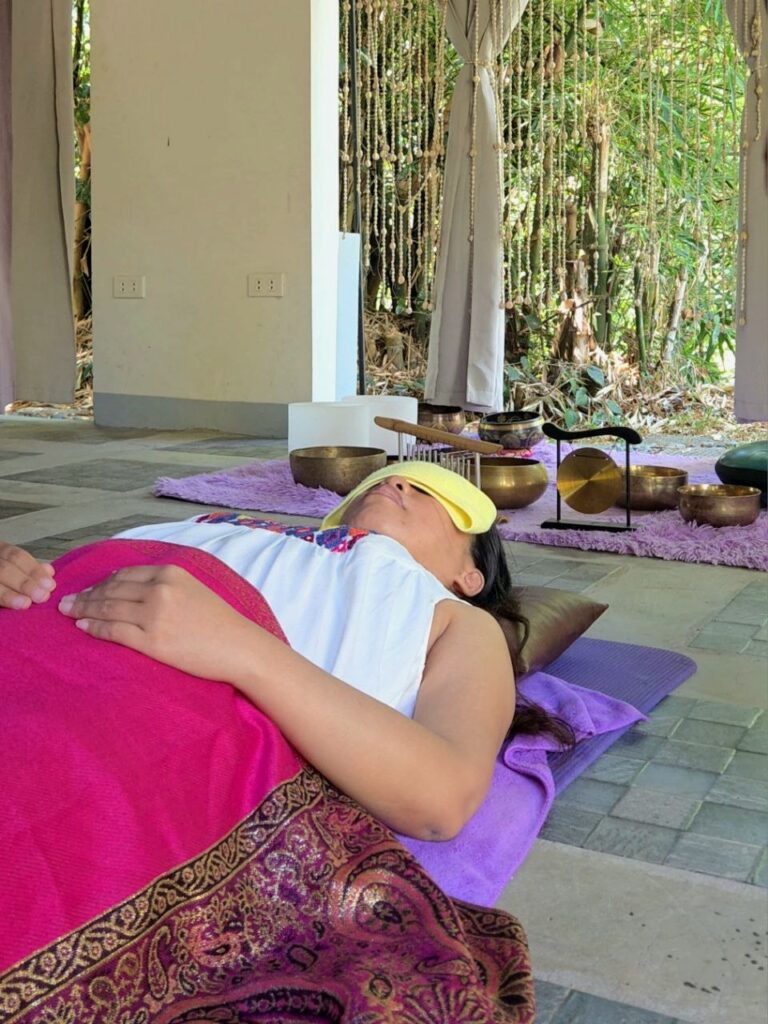
Unlike some of the other activities during the retreat, sound bathing was not entirely unfamiliar to me. I already knew that certain sounds could calm me down in ways words sometimes could not. When I first read about sound bathing, the descriptions mentioned things like nervous system resets, stress relief, and restoring mental balance through sound frequencies and vibrations.
It sounded interesting. But what I did not expect was to fall asleep in the middle of the session.
And not just the kind of sleep where I was half-aware of my surroundings either. I genuinely drifted off somewhere between the sounds, the stillness, and the exhaustion I apparently had been carrying for much longer than I realized.
Waking up afterward actually felt slightly embarrassing because I had absolutely no idea how long I had been asleep.
But maybe that was also the point. That my body finally felt safe enough to rest.
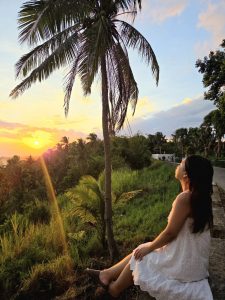
The experience reminded me of watching sunsets, sitting quietly beside the ocean, or staring at a river long enough for my thoughts to soften. There was something mesmerizing and deeply calming about it. Not empty in the way meditation sometimes felt for me, but gently immersive instead. For the first time during the retreat, relaxation stopped feeling forced. And that was the moment I finally understood something important: not everyone calms down in the same way.
Some people find peace in silence and stillness. Others (me included, again) find it in sounds, movement, water, music, or repetitive rhythms that slowly quiet the nervous system without demanding too much from it.
I think I finally found the kind of rest my body understands.
Healing did not arrive like a breakthrough
All in all, I genuinely enjoyed the retreat.
Maybe not in the ways I originally expected to enjoy it, but I enjoyed it nevertheless. Because the retreat did not just help me detoxify or de-stress. More importantly, it helped me understand myself better. What actually calms me down. What kind of rest my body responds to. What works for me and what does not.
Some of the realizations felt surprisingly small and ordinary at first, but somehow they stayed with me the longest. Because now I understand that knowing how your mind works is not a small thing at all. Understanding what your body recognizes as safety, rest, and peace is one of the most important things you can learn about yourself.
Since the beginning of the year, I have been telling myself that I want to live with more intention. I want to show up fully for the life I am trying to build. A slower life. A softer life. A meaningful one.
Will I achieve that immediately? Probably not.
Because learning how to slow down is not something that happens overnight, especially when your mind and body have spent so much time operating in survival mode. I still need to learn how to calm down. How to let go. How to say no to things that are no longer aligned with the kind of life I want to create. And most importantly, how to fully embrace the opportunities I am given to live more intentionally instead of simply rushing through life.
Of course, not every experience I will have moving forward will perfectly align with that goal. And that is okay too.
Would I go on another wellness retreat again? Definitely.
But maybe the second time around, I would no longer arrive expecting myself to heal in one specific way. Instead, I would simply arrive more willing to listen to myself carefully, patiently, and honestly.